
Indian companies can fall under the GDPR even without an office, staff, or infrastructure in Europe. The key question is not location. It is whether the business targets people in the EU or monitors their behaviour there.
That creates two immediate questions. First, does the GDPR apply under Article 3(2)? Second, if it does, does the company also need an EU representative under Article 27?
This guide explains how Indian companies should assess GDPR scope, when Article 27 applies, what an EU representative does, and how DPDP work in India can support privacy readiness in 2026.
Why GDPR Matters for Indian Companies in 2026
GDPR analysis is no longer a niche legal exercise for Indian companies. It affects market entry, enterprise sales, procurement, contract negotiation, security review, and customer trust. A company can be fully based in India and still face direct GDPR obligations if it engages with people in the EU in the right way.
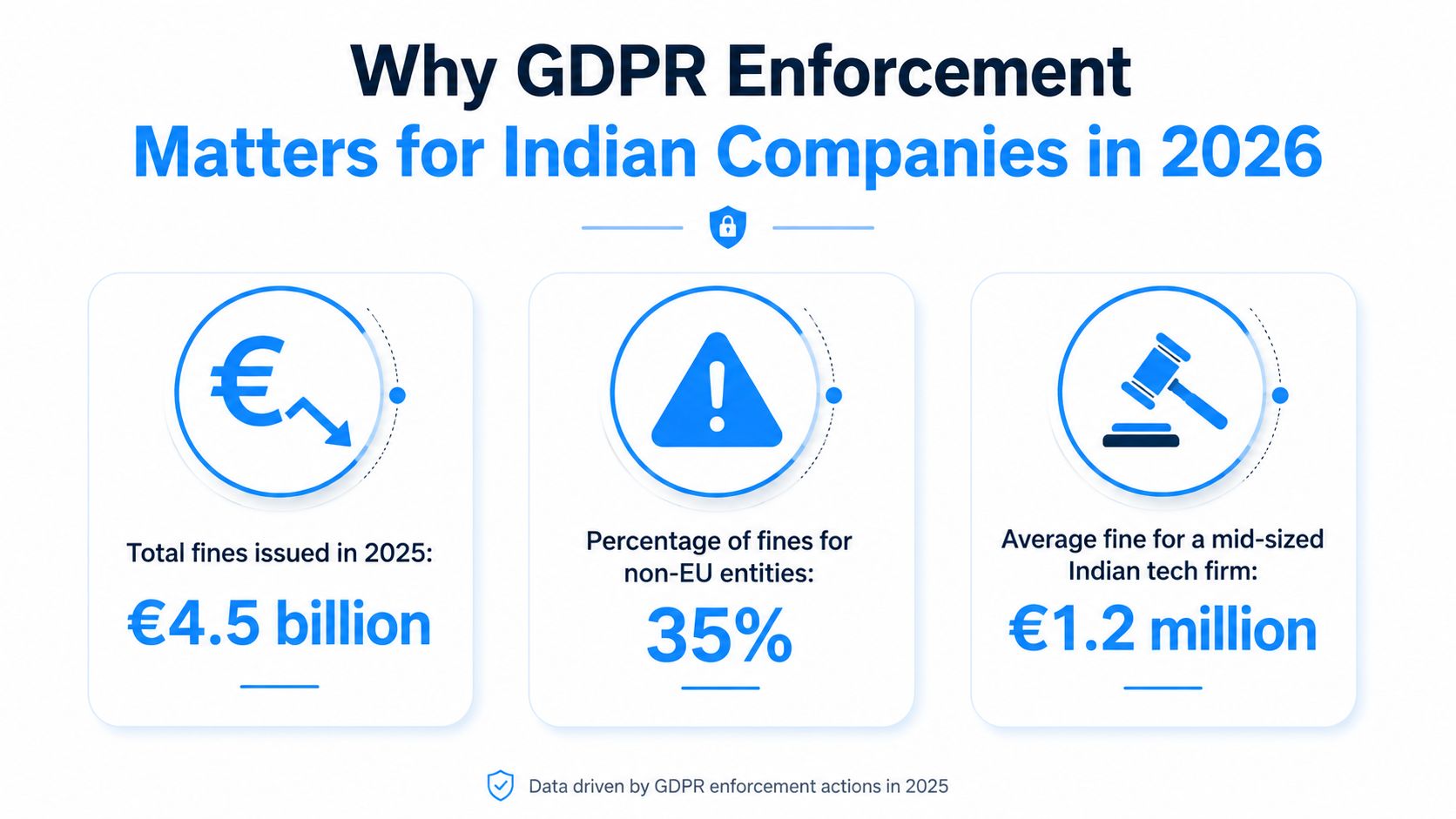
That means a SaaS provider with EU customers, an e-commerce business shipping to EU buyers, or an analytics platform studying user behaviour in the EU may all need a formal GDPR position. In some cases, they may also need an EU representative under Article 27.
The risk goes beyond fines. It also includes delayed deals, procurement friction, inconsistent privacy notices, slow handling of data subject requests, and weak internal ownership when entering regulated markets.
Leadership point: If EU expansion is part of the plan, assess GDPR scope before launch, not after customer acquisition begins.
European Data Protection Board guidance on GDPR territorial scope
When Does GDPR Apply to Indian Companies?
The GDPR does not apply to every Indian business that touches data connected to Europe. The core test comes from Article 3, especially Article 3(2), which extends the GDPR to certain organisations outside the EU.
In practical terms, an Indian company may fall within scope if it:
- offers goods or services to people in the EU
- monitors the behaviour of people in the EU
If either limb applies, the company should assess the rest of its GDPR obligations, including transparency, lawful basis, rights handling, security, contracts, recordkeeping, and whether Article 27 requires an EU representative.
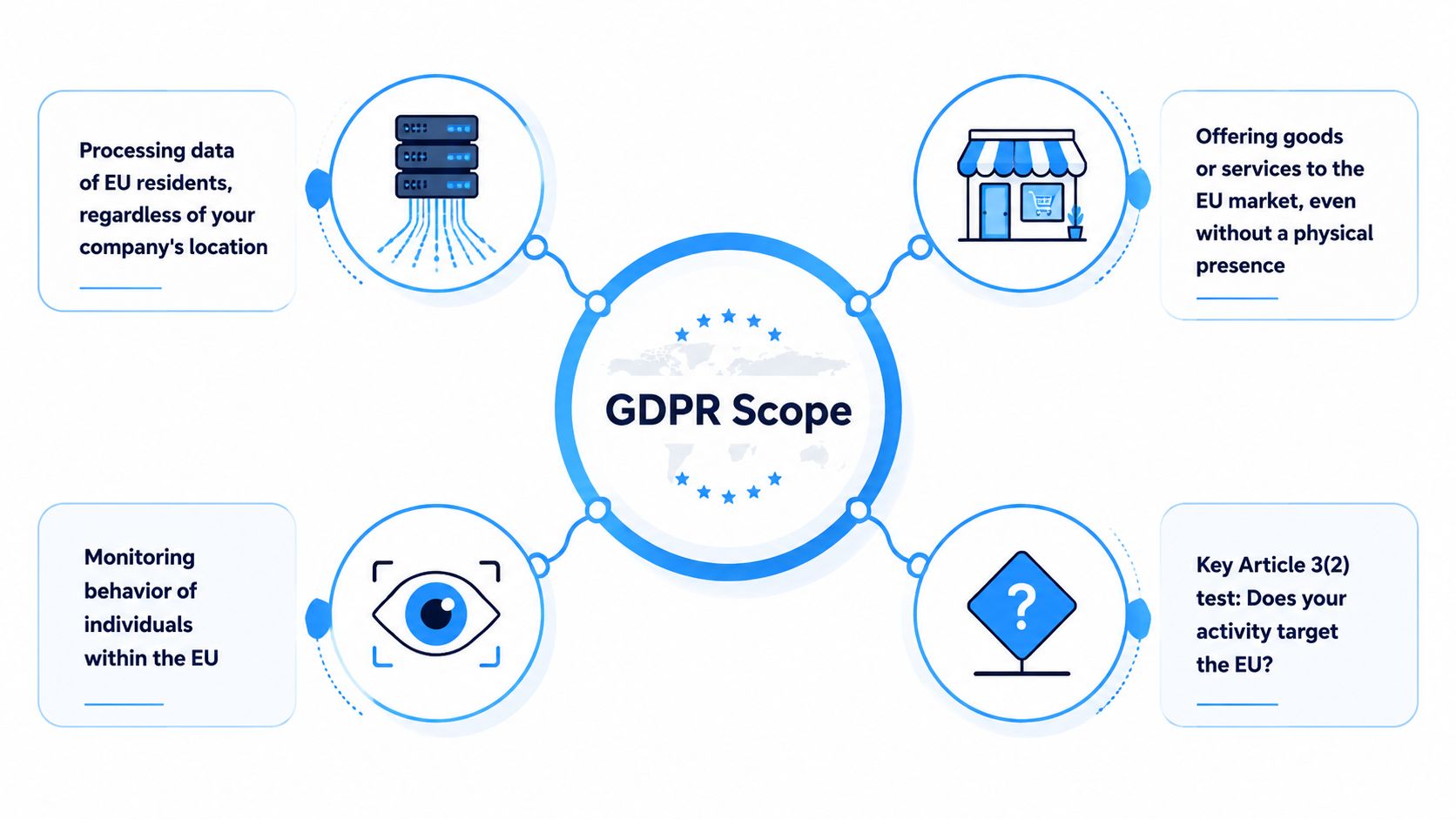
Article 3(2) is the starting point
Many teams start with the wrong question: do we have an office in Europe? Physical presence is not the main issue under Article 3(2). A company based in Bengaluru, Mumbai, Hyderabad, Pune, Chennai, or elsewhere in India can still be directly subject to the GDPR.
The better questions are:
- Are we deliberately selling or marketing to people in the EU?
- Are people in the EU signing up for, paying for, or using our service?
- Are we tracking, profiling, or analysing the behaviour of individuals in the EU?
- Do our product, contract, or support flows create direct GDPR exposure?
A good scope review should be evidence-based. It should examine product design, checkout flows, shipping settings, pricing, ad campaigns, support operations, analytics tooling, contracts, and privacy notices.
Signs that an Indian company may be targeting the EU
EU targeting is usually judged through practical indicators, not one single fact. Common signals include:
- EU country selection in onboarding, checkout, or delivery flows
- pricing in euros or campaigns built for EU markets
- sales outreach or account management aimed at EU customers
- localised support for customers in EU Member States
- terms, privacy notices, or commercial materials written with EU users in mind
- enterprise contracts that assume GDPR terms and rights support
One factor alone may not settle the issue. Several together often point to deliberate EU-facing activity.
| Business condition | Compliance question |
|---|---|
| EU-facing sales activity | Is the company deliberately offering goods or services to people in the EU? |
| EU onboarding or delivery | Are product and commercial flows built to serve EU users or customers? |
| Enterprise procurement | Do EU customers expect GDPR-specific contract and process commitments? |
| Incidental EU traffic | Is there real targeting, or only occasional access from the EU? |
Official EDPB guidance on GDPR territorial scope for non-EU organizations
When monitoring behaviour can trigger GDPR scope
Indian companies often focus on sales and overlook the separate monitoring limb of Article 3(2). GDPR scope can also arise where the business observes or analyses behaviour in the EU.
That can include:
- behavioural analytics linked to identifiable users
- ad-tech and tracking tools
- profiling for recommendations or segmentation
- location-based analysis
- fraud monitoring tied to individual behaviour
- cookies or technologies used to study user activity over time
This matters especially for SaaS, ad-tech, martech, analytics, and mobile app businesses. Even without a strong EU sales motion, monitoring behaviour in the EU can create direct GDPR relevance.
When Indian Companies Need an Article 27 Representative
Article 27 can require a non-EU controller or processor that falls within Article 3(2) to appoint a representative in the EU. This is not automatic for every Indian company handling any EU-related data. The company first needs to be within GDPR scope, then assess whether any exemption applies.
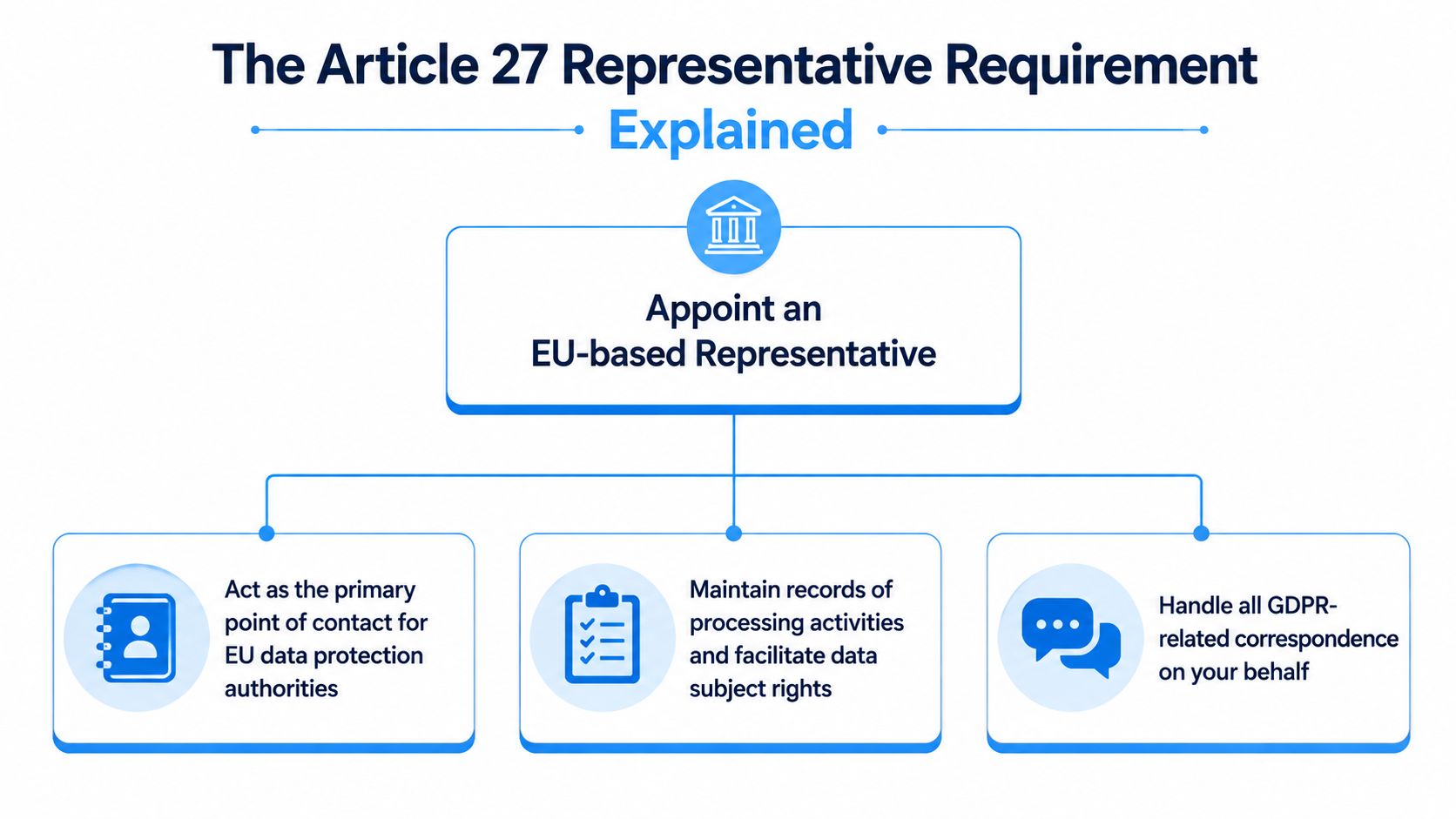
The appointment must be made in writing and should clearly define the covered entity, the relevant processing activities, communication rules, and escalation routes.
What the representative does in practice
An EU representative acts as a local contact point for supervisory authorities and data subjects on issues related to in-scope processing. The role supports communication, routing, and accountability. It does not transfer the company’s legal responsibility.
In practice, the representative should be able to:
- receive regulator communications
- receive or route data subject enquiries
- point to the relevant records and internal contacts
- support timely escalation to the company
- help maintain a workable contact structure for in-scope processing
This is why Article 27 should not be treated as a mailbox-only formality. If the company lacks current records, clear ownership, or a functional request-handling process, the appointment alone will not solve the problem.
Practical rule: Treat Article 27 as part of your operating model, not as a standalone paperwork task.
When the Article 27 exemption may apply
Some organisations may rely on the limited exemption for occasional processing that is unlikely to result in a risk to individuals’ rights and freedoms and does not involve large-scale processing of special category data or criminal offence data.
That exemption should be applied cautiously. If EU-related activity is recurring, commercial, embedded in the product, or supported by regular analytics or behavioural tools, a documented Article 27 assessment is usually safer than assuming the exemption applies.
How to operationalise the role internally
Before appointing a representative, the company should decide who internally owns:
- regulator communications
- data subject request handling
- legal analysis
- engineering and product responses
- incident and security escalation
- recordkeeping updates
The representative arrangement should also align with privacy notices, records of processing, request intake channels, and escalation procedures. The stronger the internal workflow, the more useful the Article 27 appointment becomes.
Common Scenarios for Indian Companies
Different business models raise different GDPR questions.
Indian SaaS with EU customers. If an Indian software company actively sells to EU organisations or supports EU-based users, GDPR scope may arise. The company should also map where it acts as a controller, a processor, or both.
E-commerce selling to EU consumers. If an Indian retailer markets to EU shoppers, accepts EU orders, or manages fulfilment and support for EU buyers, there is likely a strong targeting analysis to do.
Ad-tech and analytics. These businesses often underestimate the monitoring limb. Profiling, segmentation, tracking, and behaviour-based analytics tied to individuals in the EU can trigger direct GDPR obligations.
Service providers processing EU-related data indirectly. An Indian provider may handle personal data connected to Europe only because its customer instructs it to do so. That does not automatically remove risk, but it does mean the service model, instructions, and role allocation need close review.
Sporadic EU traffic. A few EU visitors, occasional inbound leads, or isolated transactions do not always mean GDPR scope exists. The key question remains whether the business is deliberately engaging people in the EU or monitoring their behaviour there.
For companies that need specialist help assessing scope, appointing an EU representative, or building a workable response process, Oyster Shield is one option to consider.
The most common mistake is focusing on where the company is located. The legal trigger is the activity.
Why Enforcement Still Matters Without an EU Office
Some Indian companies assume GDPR risk is low if they have no branch or staff in Europe. That is too narrow a view. GDPR enforcement is distributed across multiple supervisory authorities in the EU, and exposure can arise wherever affected individuals are located.
That matters because scope, complaints, procurement expectations, and regulator contact can all create pressure even before any formal enforcement outcome. For many businesses, the first impact is operational and commercial. It appears in deal friction, security reviews, customer questionnaires, and escalated rights requests.
A defensible position depends on more than legal theory. It depends on being able to explain why the GDPR does or does not apply, who owns incoming requests, what records exist, and how the company responds in practice.
How DPDP Readiness Supports GDPR Readiness
For Indian companies, GDPR readiness increasingly overlaps with preparation for the Digital Personal Data Protection Act, 2023 and the DPDP Rules, 2025. The two regimes are not identical, but they push companies to build many of the same operational capabilities.
That includes:
- data mapping and processing inventories
- clearer notices and consent design
- ownership for privacy contacts and escalations
- processor and vendor oversight
- breach response planning
- stronger documentation discipline
Official EDPB guidance on Article 27 and territorial scope
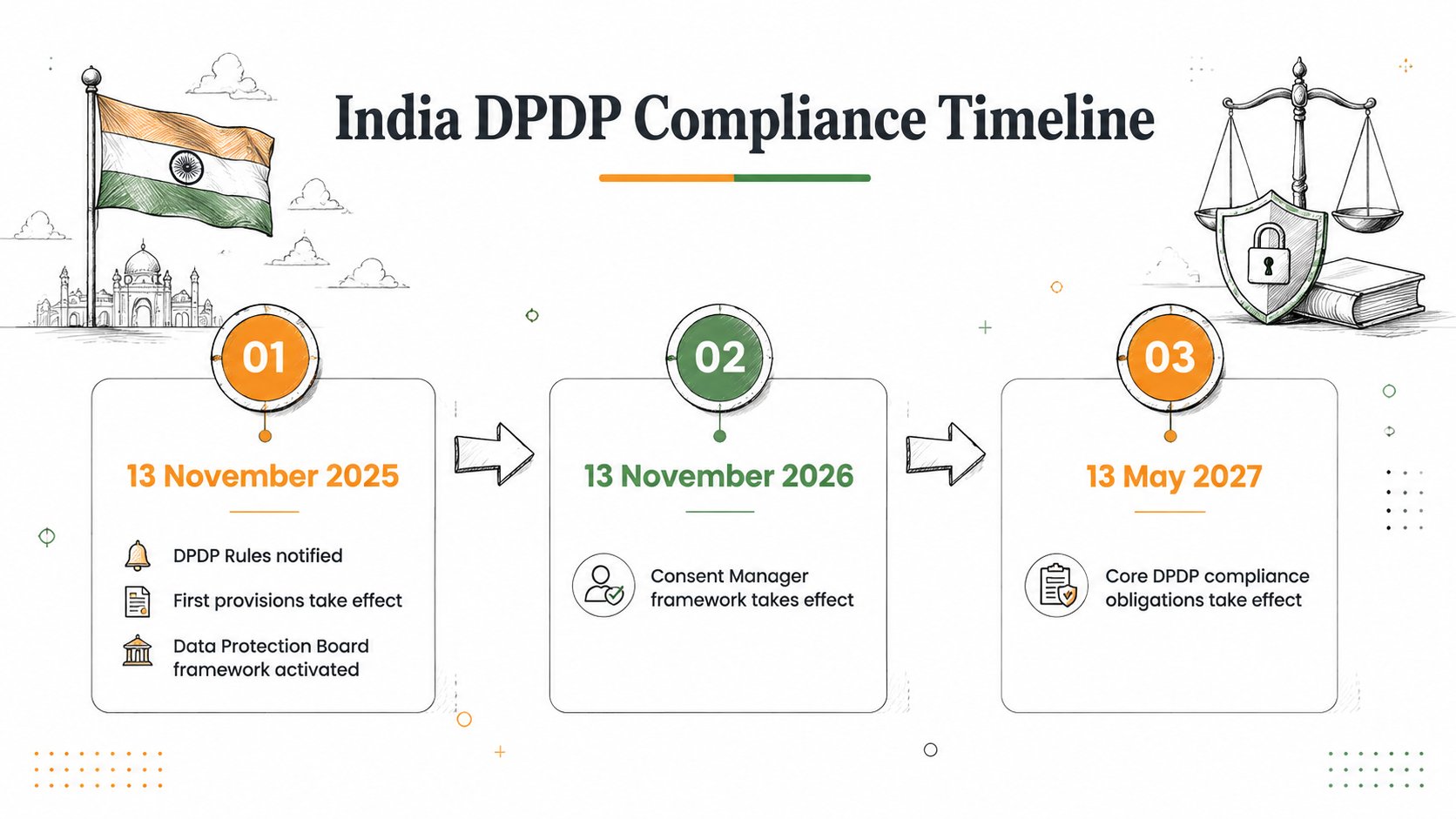
The DPDP implementation timeline described in the supporting material creates a useful planning path for internationally active Indian companies. Administrative provisions take effect from 13 November 2025, the Consent Manager framework from 13 November 2026, and broader operational obligations from 13 May 2027.
There is still an important distinction. Under DPDP, some organisations may need to publish contact details for a Data Protection Officer or authorised representative in certain contexts. Under GDPR, Article 27 can create a separate EU representative requirement for in-scope non-EU entities. One does not replace the other.
Digital Personal Data Protection Rules, 2025 (G.S.R. 846(E))
DPDP Act commencement notification (G.S.R. 843(E))
International Data Transfers, DPAs, and SCCs
For Indian companies serving European customers, readiness often extends beyond scope analysis and privacy notices. If personal data is transferred from the EU or EEA to India, the parties will usually need an appropriate transfer mechanism.
Because India does not currently have an EU adequacy decision, Standard Contractual Clauses, or SCCs, are commonly used. In many enterprise deals, an Indian provider may be asked to sign both an Article 28 data processing agreement and the relevant SCCs.
| Document | Main purpose | Typical use |
|---|---|---|
| Article 28 DPA | Sets out required controller-processor terms such as instructions, security, subprocessors, and assistance obligations | Used when an EU customer appoints an Indian provider to process personal data on its behalf |
| SCCs | Provides a transfer mechanism for personal data sent outside the EU or EEA to a country without an adequacy decision | Used when personal data is transferred from the EU or EEA to India |
In practice, many Indian companies need both. The DPA governs the processing relationship. The SCCs address the cross-border transfer.
This is another area where DPDP preparation can help. A company with current vendor lists, documented safeguards, clear subprocessor oversight, and disciplined approval processes is much better placed to meet EU customer procurement expectations.
A useful readiness review should check whether contracts, security documentation, transfer language, and actual operations all align.
A 2026 GDPR Readiness Checklist for Indian Companies
audit-ready cloud with CloudCops GmbH
Use this checklist as a practical action plan.
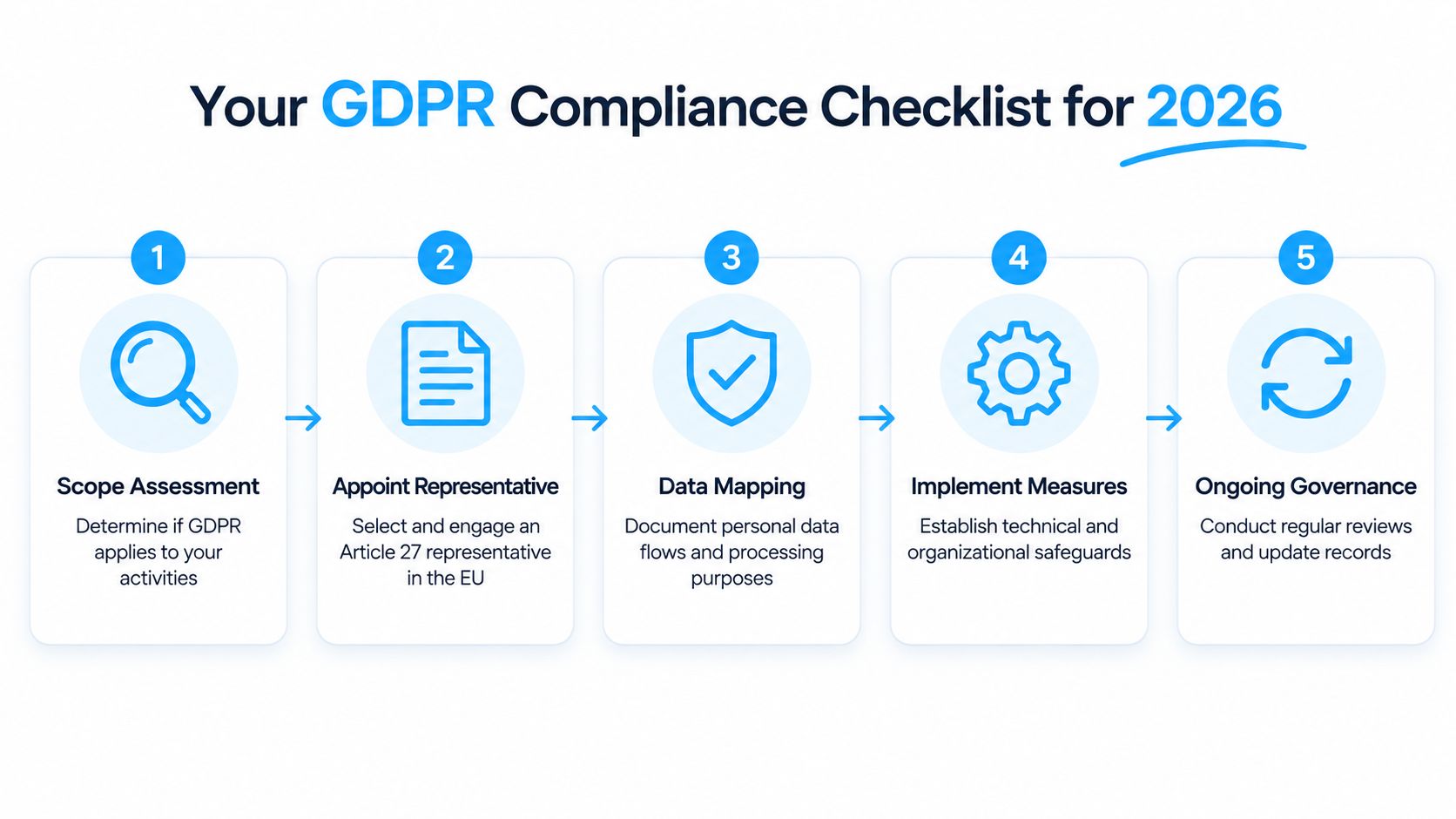
- Assess Article 3(2) scope. Review sales, onboarding, contracts, analytics, ad-tech, support, and product decisions connected to people in the EU.
- Map roles and data flows. Identify where the company acts as a controller, processor, or both, and document systems, purposes, recipients, and vendors.
- Assess Article 27. If Article 3(2) applies, decide whether an EU representative is required and record the reasoning.
- Check outward-facing materials. Align privacy notices, contract language, support channels, and rights messaging with actual operations.
- Build a request-handling workflow. Define intake, verification, routing, ownership, escalation, approval, and evidence retention.
- Review transfer readiness. Confirm whether DPAs, SCCs, subprocessor disclosures, and supporting security information are ready for procurement review.
- Use DPDP as a governance trigger. Align Indian privacy implementation with broader cross-border readiness rather than running separate workstreams.
- Reassess regularly. Review scope whenever products, analytics, customer types, geographies, or processing activities change.
A defensible GDPR position depends on documented reasoning, current records, accurate public statements, and a response process that works under pressure.
Conclusion
GDPR can apply directly to Indian companies even without any physical presence in Europe. The real issue is whether the business targets people in the EU or monitors their behaviour there. If it does, Article 27 may also require the appointment of an EU representative.
For 2026, the best approach is not to treat GDPR as an isolated legal problem. It is better handled as part of a broader privacy readiness programme that also takes DPDP implementation seriously. Companies that do this well are more likely to move faster in procurement, respond better to customer diligence, and enter EU markets with fewer avoidable gaps.
Disclaimer: This guide is provided for general information purposes only and does not constitute legal advice. The application of EU data protection and other regulatory requirements depends on the specific circumstances of each organisation. You should obtain appropriate legal advice where necessary before relying on this information or making compliance decisions.
AI notice: This article was prepared by an expert with AI assistance.